
The State as a False Idol
Thus Spoke ZarathustraThis flow traces Zarathustra’s critique of the state from its claim to represent the people to its condemnation as a force that consumes individuality.
increasing Bearing strength in each event
 decreasing
Bearing strength in each eventdecreasingPeoples Create Their Values
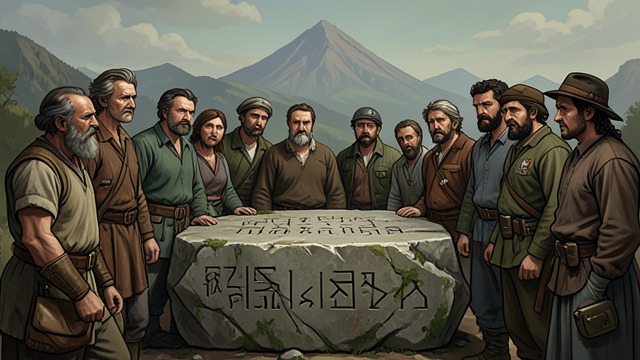
Peoples Create Their Values
Shared customs take shape
Zarathustra describes peoples as creating languages of good and evil through custom and law. Collective values express histories of need and struggle.
Creation precedes administration
This account prepares his distinction between a living people and a state that claims to speak for it. Political authority is judged by whether it serves life or absorbs it.
The Monster Claims the People
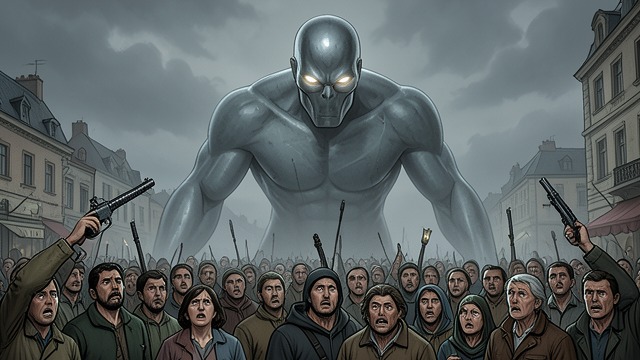
The Monster Claims the People
A cold declaration
The state calls itself the people while presenting its own authority as supreme. Zarathustra exposes this identification as a lie rather than a natural unity.
Appropriation disguised as order
The state gathers people under its symbols and language, then treats its power as if it were theirs. The image of the cold monster makes political abstraction feel predatory.
The Superfluous Are Consumed

The Superfluous Are Consumed
People become material
Zarathustra presents the state as an invention for managing the “many-too-many.” It draws citizens in, uses their work and virtues, and makes submission appear meaningful.
Slow self-erasure
The state’s supposed life becomes a form of collective diminishment. Individual powers are redirected toward the idol rather than toward distinctive creation.
Escape Toward Free Life

Escape Toward Free Life
A refusal of worship
Zarathustra urges his listeners to leave the state’s idolatry and seek places where great souls can live freely. Solitude becomes a political and creative alternative.
The necessary individual
Where the state ceases, he imagines the unique and irreplaceable person beginning. The claim is less a blueprint than a demand to stop confusing administration with human purpose.
The Political Question Remains
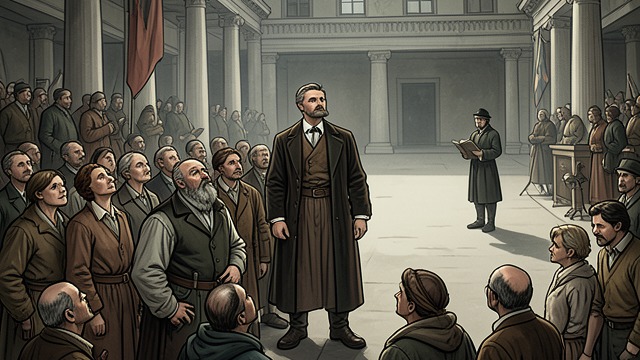
The Political Question Remains
Kings and crowds reconsidered
Later encounters with the kings and Zarathustra’s reflections on the mob revisit political rule. Existing rulers appear compromised, while popular power risks elevating smallness into a universal ideal.
A future order imagined
Zarathustra calls for a new nobility based on creating and cultivating the future. The political problem remains open because no present arrangement embodies that standard.
Before Zarathustra’s address on the state
During the discourse Of the New Idol
Midway through the New Idol discourse
At the close of the New Idol discourse
Part Three, during reflections on rulers and peoples
